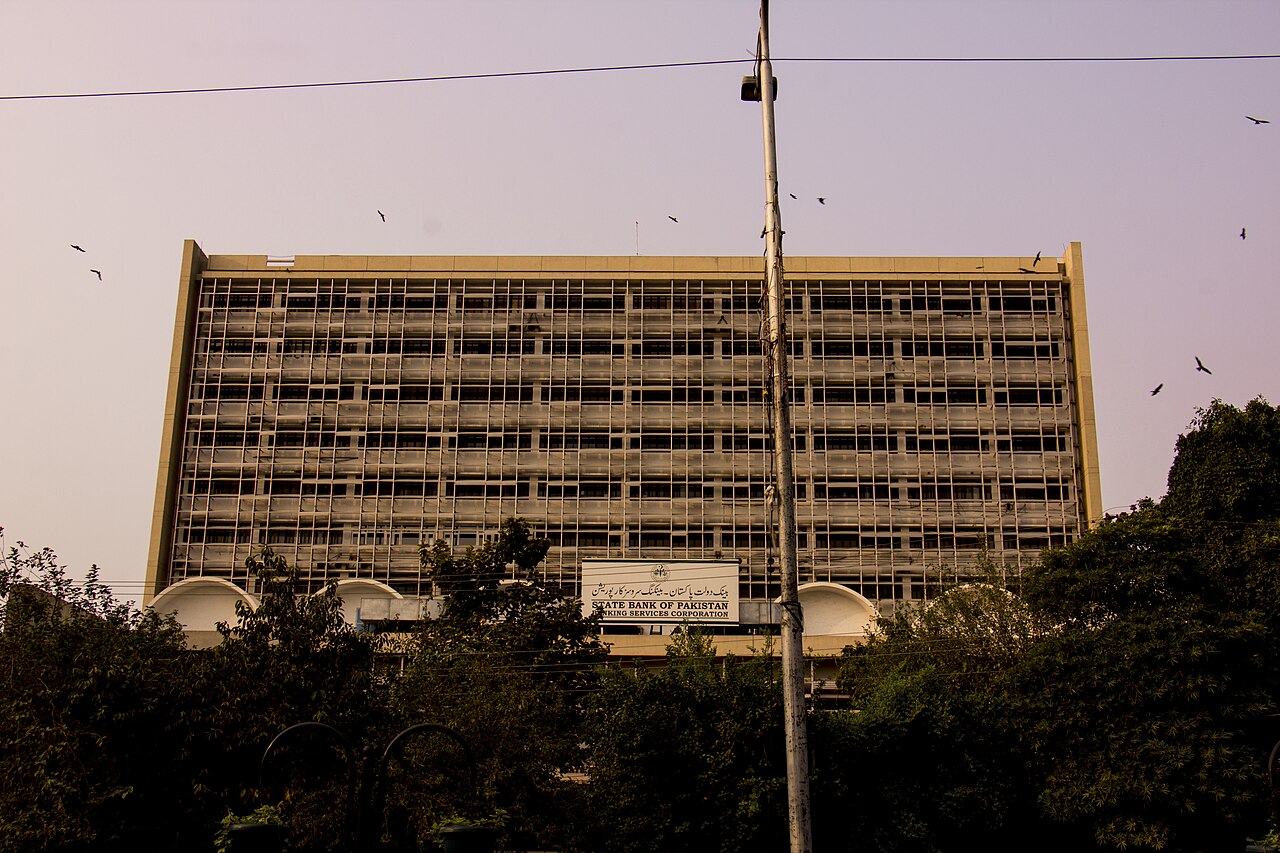
Photo: Usman Ghani (Usman.pg) / Wikimedia Commons ↗, CC BY-SA 3.0 ↗
KARACHI, November 13, 2026 — The CTR limit in Pakistan is now Rs3 million: banks and other reporting entities report a cash transaction to the Financial Monitoring Unit (FMU) only when it reaches Rs3 million, up from Rs2 million. The Ministry of Finance notified the new threshold on November 11 ↗ “with immediate effect”, the FMU circulated it the same day ↗, and the State Bank of Pakistan passed it to banks in BPRD Circular Letter No. 24 of 2026 ↗ on November 12.
The Rs2 million figure had been in place since January 21, 2015. The new one is the first change to the CTR (currency transaction report) limit in almost 12 years.
What changed
- Before: Rs2,000,000, set by Finance Division S.R.O. 73(I)/2015 of January 21, 2015 (FMU CTR FAQs ↗)
- Now: Rs3,000,000 as “the minimum amount for reporting Currency Transaction Reports (CTRs) to the Financial Monitoring Unit” (Ministry of Finance notification ↗)
- Effective: November 11, 2026, with immediate effect
What a CTR is, and what it is not
A CTR is a report a bank, microfinance bank, exchange company or other reporting entity files with the FMU about a single cash transaction at or above the threshold. Under the FMU’s 2025 reporting regulations ↗, it covers a cash transaction “equal to or exceeding the specified threshold” and must be filed on goAML within seven working days.
It is not a limit on how much cash you can deposit or withdraw, and it is not a fee or a tax. Nothing in the notification caps cash transactions; it changes only the amount above which the report is automatic. A CTR is also confidential: the FMU’s CTR FAQs ↗ say it “is not supposed to be disclosed, directly or indirectly” to anyone involved in the transaction, under section 34 of the Anti-Money Laundering Act, 2010.
A suspicious transaction report (STR) is different. It has no amount threshold. A bank files one whenever it suspects a transaction, whatever its size, and the new Rs3 million figure does not change that.
Which transactions are reported now: worked examples
| Transaction | Reported as a CTR before November 11? | From November 11, 2026? |
|---|---|---|
| Rs2,500,000 cash deposit into your own account | Yes (Rs2 million or more) | No (below Rs3 million) |
| Rs3,000,000 cash withdrawal at the counter | Yes | Yes (equal to the threshold counts) |
| Three cash deposits of Rs1,000,000 on the same day | No CTR; the FMU does not require daily totals to be added up | No CTR, but the bank may file an STR if it suspects the deposit was split to avoid reporting |
| Rs5,000,000 sent by IBFT or Raast from one account to another | No; transfers between accounts are not cash | No |
| Rs3,200,000 cash put into a cash deposit machine of another bank, credited to your account | Yes, filed by the bank that holds your account | Yes, filed by the bank that holds your account |
| Foreign currency cash worth Rs3,000,000 or more exchanged at an exchange company | Yes (at Rs2 million or more) | Yes |
| Cash payment of a gas, electricity or telephone bill issued by the utility | Exempt | Exempt |
Sources: Ministry of Finance notification of November 11, 2026 ↗; FMU CTR FAQs ↗ (no aggregation, structuring as STR, foreign currency); FMU CTR filing guidelines, 2021 ↗ (account-to-account transfers are not CTRs); FMU Circular No. 01 of 2025 ↗ (cash deposit machines of other banks); STR and CTR Regulations, 2025 ↗, regulation 7 (threshold, seven working days, utility-bill exemption) · checked 2026-11-13. The rows are our worked examples of those rules.
Government departments, local governments and statutory bodies dealing in cash with financial institutions are also exempt under regulation 7(2). The FMU can exempt a “qualified business customer” of a bank only with the National Executive Committee’s approval, under regulation 8.
How the change was made
The National Executive Committee (NEC) on AML-CFT, chaired by Finance Minister Muhammad Aurangzeb, approved “the proposed revision to the thresholds for Currency Transaction Reports” at its 19th meeting on October 27, according to the Finance Division’s press release (PR No. 715) ↗. The release gave no figure; Dawn ↗ reported the next day that the new limit would be Rs3 million.
Under section 2(xi) of the Anti-Money Laundering Act, 2010, a threshold takes effect only when the NEC specifies it by notification in the official Gazette. That notification, No. 3(40)AML/2025-P-002-0001, was signed on November 11 and modifies S.R.O. 73(I)/2015. The copy the FMU published still shows a blank S.R.O. number, with the heading “to be published in the Gazette of Pakistan – Extraordinary”, but both the FMU and SBP have told reporting entities to apply it now.
PVARA in the AML law: approved, not yet notified
The same October 27 meeting approved adding the Pakistan Virtual Assets Regulatory Authority (PVARA) to Schedule IV of the Anti-Money Laundering Act, the list of AML-CFT regulatory authorities, according to the Finance Division ↗. That would make PVARA the AML supervisor for licensed crypto firms, alongside SBP and SECP.
Unlike the CTR change, we found no notification for it: the FMU’s gazette notifications page ↗, checked November 13, 2026, lists nothing newer than August 2025. For which crypto platforms PVARA has cleared so far, see the PVARA licence tracker.
What this means for you If you deposit or withdraw cash between Rs2 million and Rs2,999,999 in one transaction, your bank no longer files an automatic CTR for it, but it still checks every transaction for suspicion, and splitting cash to stay under Rs3 million can itself lead to an STR. Transfers by IBFT or Raast are never CTRs; see fees and limits for transfers for how those work.